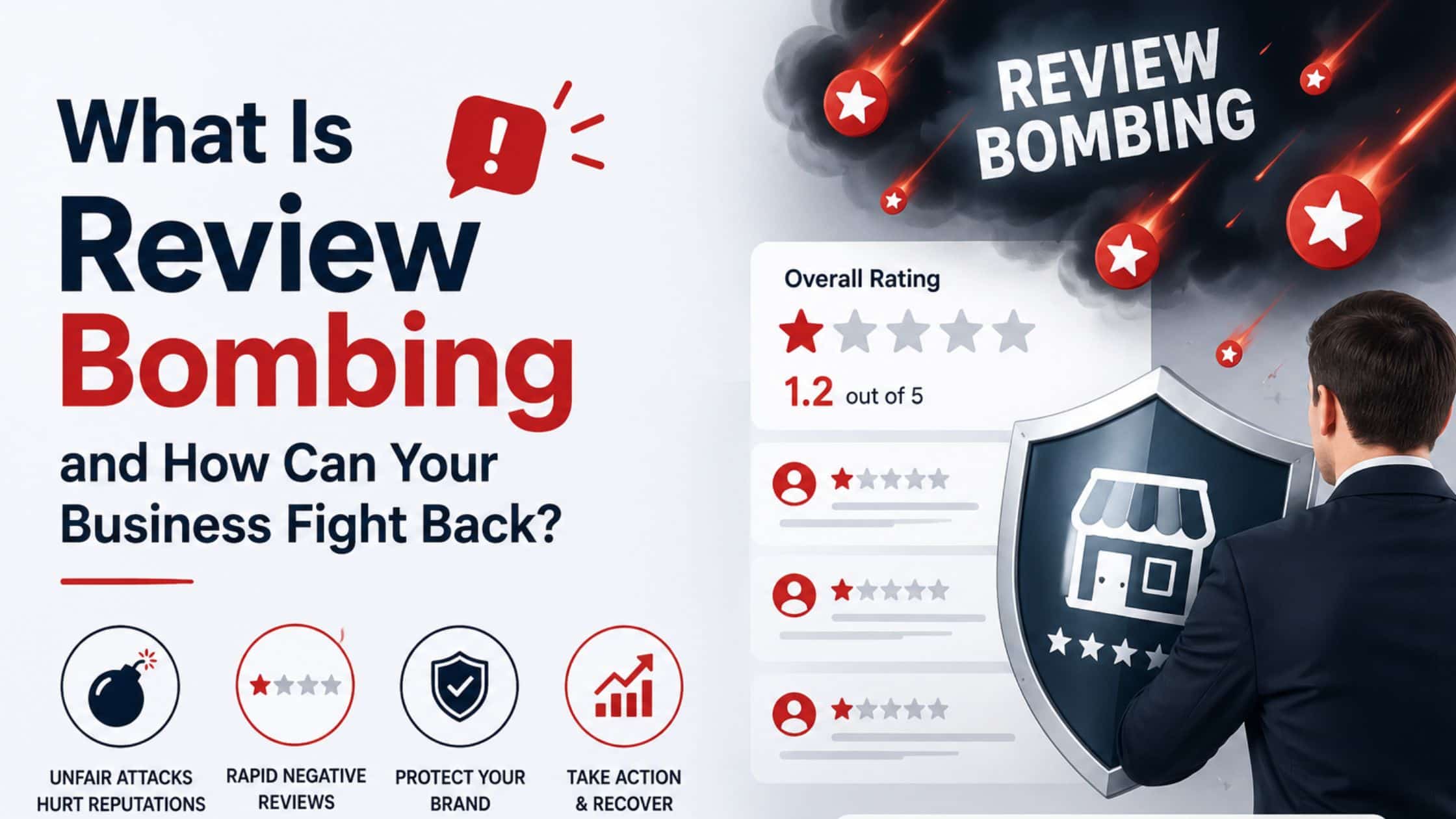
Review bombing happens when a group of people flood a business with negative reviews in a short window of time. The reviews arrive fast. They often share similar wording, similar star ratings, and similar timing. Many come from accounts with no history of using the business at all.
A genuine unhappy customer leaves one honest review. Review bombing looks different. It involves multiple reviews, often dozens within hours or days, working together to crash a business rating.
The tactic exists on every major review platform. Google Reviews, Yelp, Facebook, Trustpilot, and TripAdvisor all report cases of coordinated review attacks against businesses that did nothing to deserve them.
How Review Bombing Works
Review bombers use a few common methods. Understanding these methods helps you spot an attack early.
Coordinated Timing
Real reviews trickle in over weeks and months. Review bombing reviews arrive in clusters. Ten, twenty, or fifty-one-star reviews can appear within 24 to 72 hours.
Copy-Paste Language
Attackers often reuse the same phrases across multiple reviews. You might see identical complaints, identical typos, or identical claims about staff members who don’t exist.
Fake or Rented Accounts
Many review bombing campaigns use bot accounts or paid reviewers. These accounts show no purchase history, no profile photo, and no prior activity on the platform.
Off-Topic Attacks
Some review bombing has nothing to do with your product or service. A business can get bombed after a social media controversy, a news story, or a public statement that upset a group of people online.
Why Do Businesses Become Targets?
Review bombing rarely happens without a trigger. The most common causes include:
Competitor sabotage. A rival business pays for fake negative reviews or writes them directly, aiming to push your rating down and their own rating up.
Public backlash. A statement, policy, or decision your business makes can spark outrage online. Strangers who never used your business leave reviews to express anger about the issue, not your service.
Personal disputes. A former employee, an ex-partner, or someone with a grudge recruits friends or online communities to attack your listing.
Financial extortion. Criminals post a wave of fake one-star reviews, then contact the business demanding payment to make the reviews stop. Google introduced a dedicated extortion reporting tool in late 2025 after this scam pattern grew across business profiles.
The Real Cost of Review Bombing to Your Business
Reviews shape buying decisions before a customer ever picks up the phone. A single negative Google review can drop purchase intent by 42%. Once a shopper reads three negative reviews, 59% of buyers walk away and choose a competitor instead.
Across all negative reviews, 86% of customers say they hesitate before buying from a business with a damaged rating.
Review bombing multiplies this damage. Instead of one bad review, your business faces dozens, all within days. Your star rating drops fast. Your local search ranking can drop with it, since Google weighs review volume and recency in its local ranking signals.
New customers see the damage first, before they see anything else about your business.
How to Spot Review Bombing
Look for these warning signs on your Google Business Profile or other review platforms:
- A sudden spike in one-star reviews within 24 to 72 hours
- Reviews with near-identical wording or complaints
- Reviewer accounts with no history, no photo, or no prior activity
- Reviews mentioning staff, products, or locations that don’t exist
- Reviews that reference a news story, social post, or controversy instead of a real transaction
- A follow-up message demanding payment to remove the reviews
If you see two or more of these signs together, treat the situation as review bombing rather than standard negative feedback.
Is Review Bombing Illegal in Australia?
Australian law gives targeted businesses more protection than most owners realise.
1. Australian Consumer Law
Section 18 of the ACL bans misleading and deceptive conduct in trade or commerce. Coordinated fake reviews, whether posted by a competitor or a hired group, can breach this law.
2. Defamation law
Small businesses with fewer than 10 employees can sue for defamation if a review contains a false statement of fact that causes serious financial loss. A review that calls your business dishonest, unsafe, or fraudulent, without any factual basis, can meet this threshold.
Genuine opinion based on a real experience is harder to challenge, since an honest opinion is a recognised legal defence.
3. Injurious falsehood
This claim applies when someone knowingly publishes a false statement that causes your business financial loss. It applies well to competitor-driven review bombing.
4. Platform policy breaches
Google, Yelp, and other platforms explicitly ban fake reviews, bulk posting, and coordinated attacks under their own content rules. A policy breach doesn’t need to meet a legal threshold to get a review removed.
Courts can also order a platform to reveal a reviewer’s identity through a legal process called preliminary discovery, which matters when an anonymous account is behind an attack.
How to Fight Back Against Review Bombing – Step-by-Step Process
1. Document Everything Immediately
Screenshot every suspicious review before it disappears or gets edited. Record the reviewer’s name, the review date, the star rating, and the exact wording. Note your average rating before and after the attack started. This evidence supports every step that follows.
2. Report Each Review to the Platform
Flag every fake review through the platform’s reporting tool. On Google, select the three dots next to a review and choose “Flag as inappropriate.” Pick the most accurate reason and add a short, factual note, such as “reviewer has no record as a customer” or “review posted as part of a coordinated attack.”
Specific, factual reports get faster results than vague complaints.
3. Respond Calmly and Publicly
Post a brief, professional reply to affected reviews. State that you have no record of the interaction and invite the reviewer to contact you directly. Avoid arguing or accusing anyone publicly.
A calm response reassures real customers reading the page and denies attackers the emotional reaction they want.
4. Never Pay an Extortion Demand
If someone contacts you asking for money to remove reviews, don’t pay. Payment doesn’t guarantee the reviews disappear, and it marks your business as an easy target for repeat attacks. Report extortion attempts through Google’s dedicated extortion reporting form and keep every message as evidence.
5. Escalate Through Formal Support Channels
If flagged reviews stay online, raise a support case through your Business Profile account. Reference the pattern directly: dates, review volume, similar wording, and any links to a competitor or dispute. A well-documented pattern strengthens your case and speeds up platform action.
6. Consider Your Legal Options
If reviews contain false statements of fact and platform reporting fails, legal action becomes a real option. A concerns notice, a defamation claim, or an ACL complaint can apply depending on your situation. Early legal advice helps you pick the fastest, most cost-effective path.
7. Bring in Review Removal Experts
Coordinated review bombing often produces more fake reviews than a busy owner can fight alone. A Google review removal service can handle the full volume, submit properly documented reports across every affected review, and track the case through to resolution.
How ReviewFix Helps Businesses Recover From Review Bombing
ReviewFix removes fake, unfair, and policy-violating reviews from Google and other major platforms. We handle coordinated attacks the same way we handle single fake reviews: fast, private, and backed by proven dispute methods that align with each platform’s own policies.
Our process starts with a free review check. We assess your profile, identify which reviews breach platform rules or Australian law, and build the evidence needed to get them removed. You only pay if we succeed, so a review bombing attack never becomes a financial risk on top of a reputation risk.
Every case stays confidential. We manage the dispute process directly, so you can keep running your business while we handle the removal work.
How to Prevent Future Review Bombing Attacks
Recovery matters, but prevention reduces your risk of a repeat attack.
1. Monitor your profile regularly. Set up alerts for new reviews so you catch a spike within hours, not weeks.
2. Build a strong base of genuine reviews. A large volume of authentic, positive reviews softens the impact of any sudden attack, since it dilutes the fake reviews within a bigger, more credible dataset.
3. Keep your response process ready. A calm, prepared response template means you can act within minutes of spotting an attack, rather than scrambling to write one under pressure.
4. Secure your business accounts. Extortion attempts sometimes escalate into account takeovers. Use strong, unique passwords across your review platforms, email, and social accounts to close that door.
Work with a monitoring partner. Ongoing review monitoring catches new attacks the moment they start, giving you the fastest possible response window.
FAQs About Review Bombing
1. How long does review bombing usually last?
Most attacks peak within 24 to 72 hours, then taper off once reports start taking effect. Extortion-driven attacks can continue longer if the business doesn’t report the activity quickly.
2. Can I sue someone for review bombing in Australia?
Yes, in some cases. Small businesses with fewer than 10 employees can pursue defamation claims for false statements that cause serious financial loss. The Australian Consumer Law also covers coordinated fake reviews as misleading conduct.
3. Will Google automatically remove review bombing attacks?
Not always. Google uses automated detection for obvious spikes, but many fake reviews still need a manual report from the business before removal happens. Detailed, evidence-backed reports get faster results.
4. What should I do if someone demands money to stop bad reviews?
Don’t pay. Report the demand to Google through its extortion reporting tool, preserve every message as evidence, and treat the situation as a security incident rather than a customer complaint.
5. Does review bombing affect my Google ranking?
Yes. Review volume, recency, and rating all factor into local search ranking. A sudden drop in your rating can reduce your visibility in Google Maps and local search results until the fake reviews are removed.
6. How can ReviewFix help if I’m already under attack?
ReviewFix reviews your full profile, identifies every review that breaches platform policy or Australian law, and manages the removal process from start to finish. You pay nothing unless the reviews come down.
Don’t Let Fake Reviews Define Your Business
Is your business facing a sudden wave of bad reviews? Get a free review check from ReviewFix and find out which reviews we can remove, with no obligation and no upfront cost.