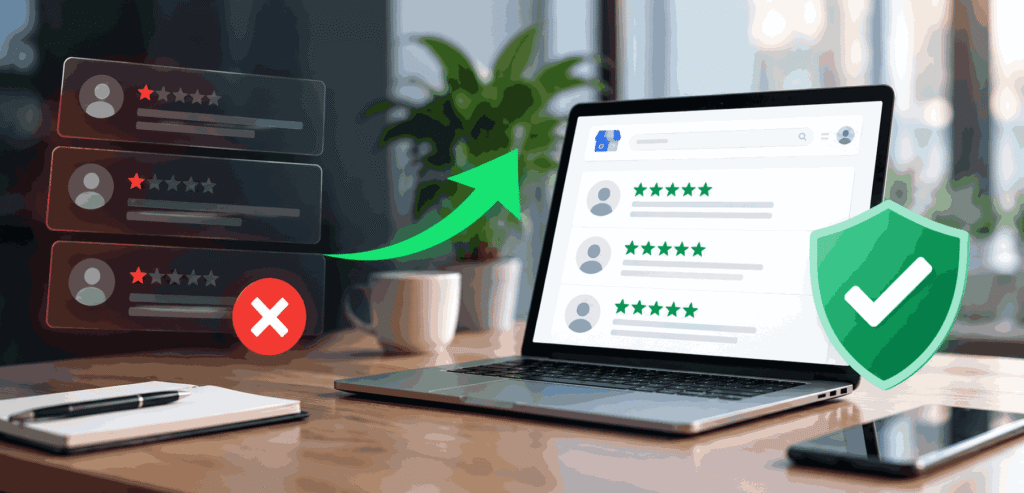
A negative review can feel like a punch to the gut. You built your business with care. A stranger typed one paragraph, and now it sits on your Google profile for every future customer to see.
Here’s the good news. A negative review does not define your brand. Your response does.
At ReviewFix, we help Australian businesses manage online reviews every day. We remove fake and unfair reviews when they break platform rules.
We also help business owners respond to genuine complaints in a way that protects trust and keeps customers coming back. This guide shares the exact approach we recommend to our clients.
Why Your Response Matters More Than the Review Itself
Customers expect businesses to make mistakes. They judge you on how you fix them.
Research backs this up. A single bad Google review can lower purchase intent by 42%. Three or more negative reviews push 59% of buyers away entirely.
These numbers sound alarming, but they hide an important detail: most buyers read your response, not just the complaint.
A calm, helpful reply can turn a one-star review into proof that you care. A defensive or angry reply can turn one bad review into a reason for hundreds of people to avoid you.
How to Respond to Negative Reviews Without Damaging Your Brand
Read the review carefully first. Acknowledge the customer’s specific issue in a calm, professional tone. Avoid arguments and generic replies. Offer a clear resolution, then move details to a private channel. Respond within 48 hours. This approach protects your brand and builds trust with future customers.
Step 1: Pause Before You Reply
Anger clouds judgment. A rushed reply often makes things worse.
Read the review twice before you write anything. Separate the facts from the emotion. Ask yourself three questions:
- Did this happen the way the customer describes it?
- Is this review genuine, or does it look fake or malicious?
- What outcome does this customer actually want?
If the review breaks platform guidelines, such as containing hate speech, false claims, or content from a non-customer, you may have grounds to report or remove it instead of responding. We cover this in a later section.
Step 2: Respond Quickly, Not Instantly
Speed builds trust. Silence looks like indifference.
Aim to reply within 24 to 48 hours. This window gives you time to check facts internally, but it still shows the customer and everyone watching that you take feedback seriously.
Set up alerts for new reviews across Google, Facebook, and other platforms your business uses. A missed review is a missed chance to show your best side.
Step 3: Use a Calm and Professional Tone
Your reply is public. Future customers will read it long after the original issue fades.
Keep your language simple and direct. Avoid sarcasm. Avoid defensive phrases like “that’s not our policy” or “you’re mistaken.” These phrases signal blame, and blame pushes readers away.
Instead, use language that shows respect:
- “Thank you for sharing this feedback.”
- “We’re sorry to hear about your experience.”
- “We’d like to understand what happened.”
Short sentences work best. Long, defensive paragraphs look like excuses.
Step 4: Acknowledge the Specific Issue
Generic replies feel hollow. Customers notice when a business copies and pastes the same response to every review.
Name the actual problem the customer raised. If they complained about a late delivery, mention the delivery. If they complained about a rude staff member, mention the interaction directly.
This small step proves you read the review carefully. It also shows other readers that your business listens.
Step 5: Take the Details Offline
Public comment sections are not the place to solve complex problems. They also expose private details you may not want visible.
After your public acknowledgment, invite the customer to continue the conversation privately:
“Please email us at [email address] or call us at [phone number] so we can resolve this properly.”
This step protects both sides. The customer gets real help. Your brand avoids a long public argument that other customers can read.
Step 6: Offer a Genuine Resolution
Words alone rarely repair trust. Customers want to know what you will actually do.
Depending on the situation, this might mean a refund, a replacement, a discount on a future purchase, or simply a clear explanation of what went wrong and what changes you have made.
State this resolution clearly, even in your public reply, when appropriate.
A business that fixes problems earns more loyalty than a business that never makes mistakes at all.
What Are the Common Mistakes That Damage Your Brand?
Avoid these patterns we are mentioning below. Each one turns a single bad review into a bigger reputation problem.
- Arguing in public. A back-and-forth argument makes your business look combative, not correct.
- Ignoring the review. Silence signals that you don’t care about customer experience.
- Using copy-paste replies. Generic responses feel dismissive and often go viral for the wrong reasons.
- Revealing private information. Never share order details, medical information, or personal disputes in a public reply.
- Attacking the reviewer’s character. Even if the reviewer is wrong, personal attacks damage your credibility, not theirs.
- Offering nothing. A reply with no action plan reads as empty.
A Simple Template You Can Use Today
Here is a structure you can adapt for most negative reviews:
Hi [Name], thank you for taking the time to share this. We’re sorry your experience with [specific issue] fell short of what we aim to deliver. We’d like to make this right. Please reach out to us at [contact detail] so our team can resolve this directly.
Adjust the tone to match your brand voice, but keep the structure: thank them, acknowledge the issue, offer a next step.
When a Response Isn’t the Right Move
Not every negative review deserves your reply. Some reviews break platform rules and qualify for removal instead. For example, if the review breaches Google’s policies, it may be eligible for removal.
Consider removal, not response, when a review:
- Comes from someone who was never a customer
- Contains false claims that damage your reputation
- Includes hate speech, threats, or defamatory statements
- Was posted by a competitor or a fake account
- Violates the specific guidelines of Google, Facebook, or another platform
Under Australian Consumer Law, businesses also have protection against reviews that cross into defamation.
If a review makes false factual claims that harm your reputation, you may have legal grounds for removal beyond platform reporting.
This is where ReviewFix steps in. We identify which reviews qualify for removal and handle the dispute process directly with the platform. You only pay if we succeed.
Turn Negative Reviews Into a Trust Signal
A business with zero negative reviews often looks suspicious to modern buyers. A small number of well-handled complaints, paired with thoughtful responses, builds more trust than a spotless record.
Use every genuine negative review as a chance to show new customers three things: you listen, you act, and you care about getting it right.
Over time, this pattern becomes part of your brand reputation, and it shows up in how customers describe you to others.
Build a Simple Review Response Process
Consistency protects your brand better than any single perfect reply. Set up a basic process your whole team can follow:
- Assign one person to monitor reviews daily.
- Reply within 48 hours using the template structure above.
- Flag reviews that may violate platform guidelines for removal.
- Track resolutions so repeat issues get fixed at the source.
- Review your response patterns monthly to spot trends.
This process turns review management from a stressful scramble into a routine part of running your business.
Frequently Asked Questions
Should I respond to every negative review?
Respond to every genuine review. Skip reviews that clearly violate platform guidelines and pursue removal instead.
How fast should I respond?
Reply within 24 to 48 hours. Faster responses show customers you take their feedback seriously.
Can I remove a negative review myself?
You can report reviews directly to platforms like Google, but the process is often slow, and success rates are low without the right approach. Services like ReviewFix specialise in getting fake and policy-violating reviews removed efficiently.
What if the review is fake?
Do not argue with a fake review in public. Report it to the platform and consider a removal service that understands platform policies and legal options under Australian law.
Does responding to reviews actually help SEO?
Yes. Search engines factor in review activity and engagement. Regular, thoughtful responses also encourage more customers to leave reviews, which strengthens your local search presence over time.
Protect Your Brand With ReviewFix
Negative reviews happen to every business. What happens next is what shapes your reputation.
ReviewFix helps Australian businesses respond to genuine feedback, remove fake or unfair reviews, and build a reputation that earns trust.
We work on a no-win, no-fee basis, so you only pay when we deliver results.