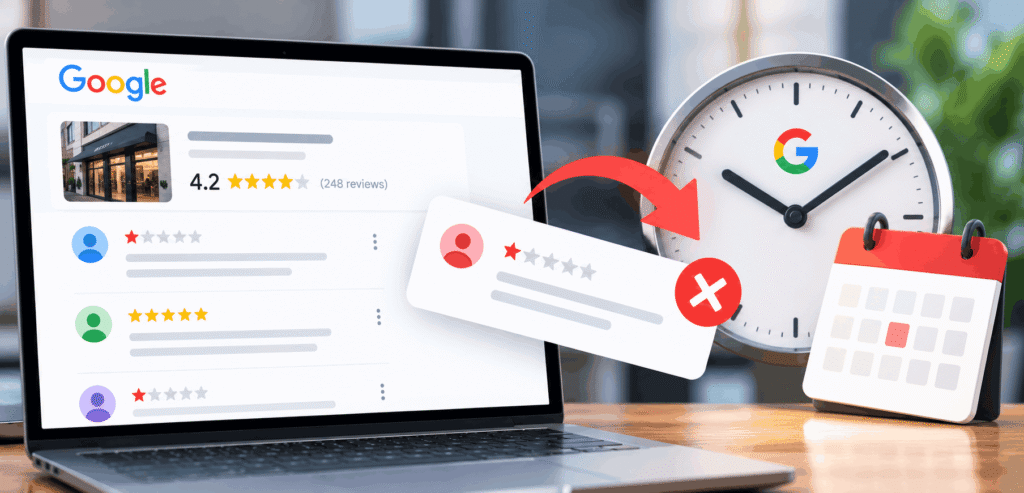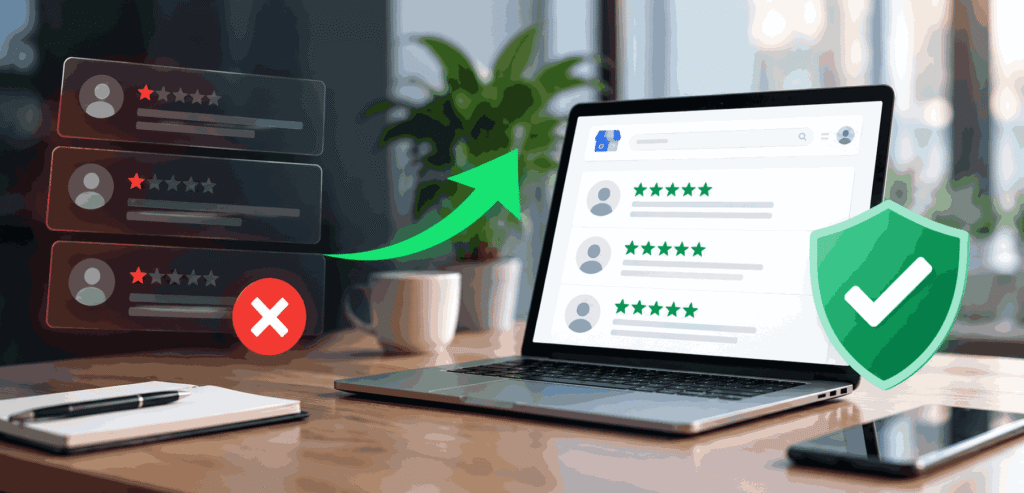
A single 1-star Google review lands on your business listing and sits there. Every new customer who searches for you sees it. Google’s algorithm registers it. Your overall star rating drops. Competitors with cleaner ratings get the clicks you used to get.
This is not a hypothetical. It happens to thousands of Australian businesses every year — and most owners do not know how much damage a bad review does until revenue starts falling.
At ReviewFix, we specialise in helping businesses manage, respond to, and remove reviews that are unfair, fake, or defamatory.
Below, we explain exactly what 1-star reviews do to your business — step by step, area by area.
- 94% of consumers say a negative review has convinced them to avoid a business
- 3.3★ Minimum star rating consumers accept before considering a business
- 40× more weight Google places on star ratings in local search ranking signals
- 22% of customers are lost after just one negative review appears in the results
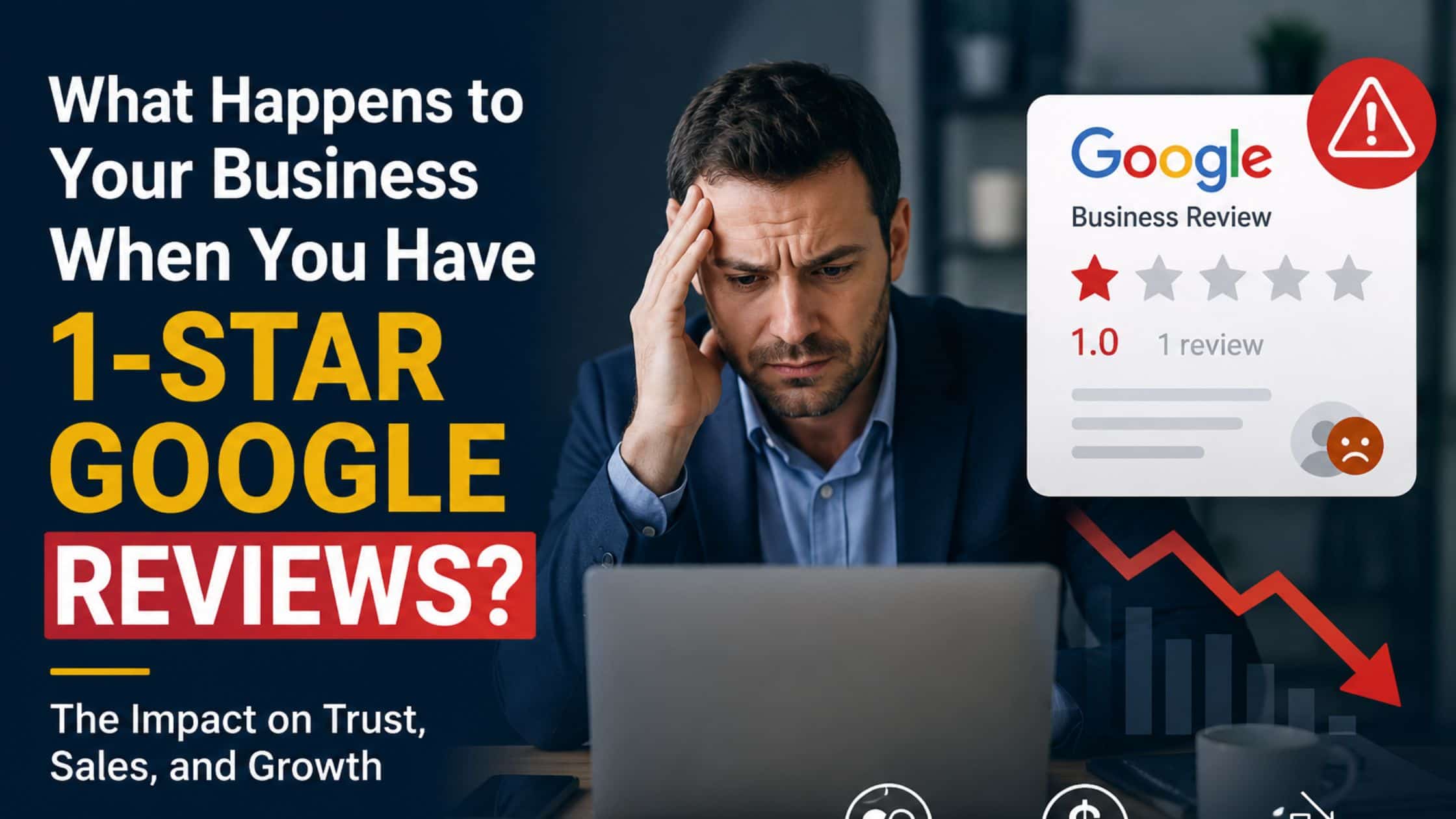
What Happens to Your Business When You Have 1-Star Google Reviews?
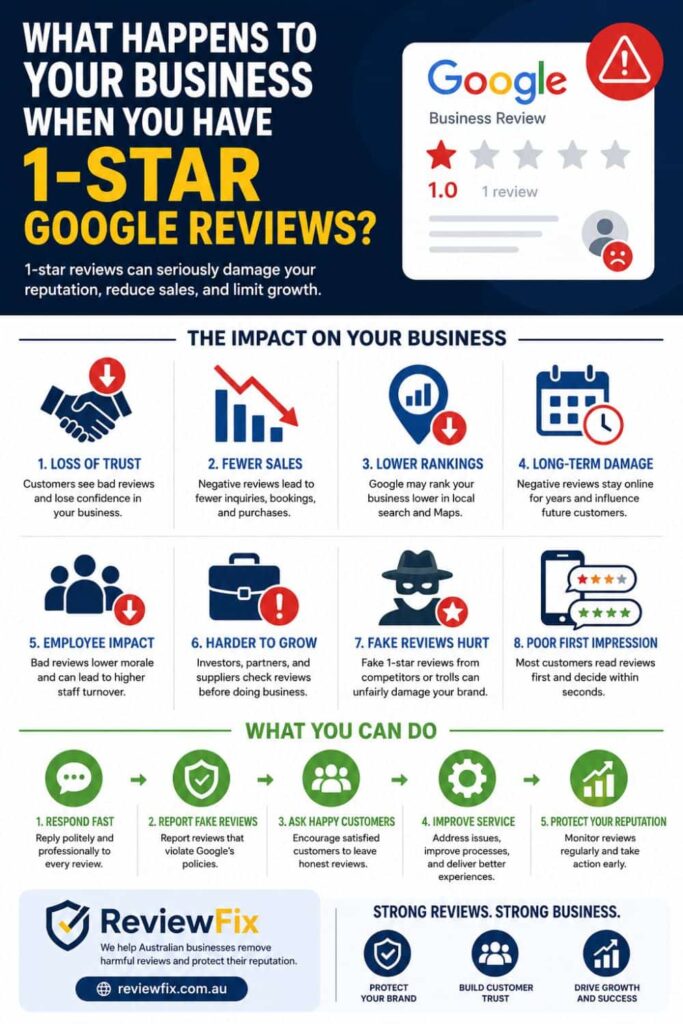
1-star Google reviews can damage trust, reduce sales, lower Google rankings, and push customers to competitors. Poor reviews can affect growth for years.
1. Your Star Rating Drops — And Customers Notice Immediately
Google calculates your star rating as a simple average. If your business has 20 reviews averaging 4.8 stars and you receive five 1-star reviews, your rating falls to roughly 4.3 stars. That shift looks small on paper. In consumer psychology, it is enormous.
Research by BrightLocal shows that 57% of consumers will only use a business if it has four or more stars. Businesses sitting between 3.5 and 3.9 stars convert significantly fewer search clicks into actual enquiries than businesses above 4.0.
Star ratings also appear directly in Google Search results and Google Maps before a customer even visits your website. Your rating is often the first piece of information they see about you — before your business name, before your address, and before your description.
“A drop from 4.7 to 4.2 stars can reduce customer enquiries by more than 30%. The star is not cosmetic — it is commercial.”
“A drop from 4.7 to 4.2 stars can reduce customer enquiries by more than 30%. The star is not cosmetic — it is commercial.”
For businesses in competitive service areas like plumbing, legal, dental, or hospitality, even half a star of difference can determine whether a potential customer calls you or your competitor.
2. Google Lowers Your Position in Local Search Results
Google’s local search algorithm, the system that decides which businesses appear in the “Map Pack” at the top of search results, uses review signals as a direct ranking factor. The number of reviews, the overall rating, and the frequency of recent reviews all feed into this calculation.
When your rating drops or a surge of 1-star reviews arrives, your local ranking can fall. Businesses ranked in positions 4 through 10 receive a fraction of the traffic that the top three positions receive. Falling out of the Map Pack entirely can reduce your organic enquiries by 60% or more.
What Google’s Algorithm Measures
Google weighs three broad factors in local ranking: relevance (does your listing match the search?), distance (how close are you to the searcher?), and prominence (how well-known and trusted is your business online?). Review ratings and review volume both sit inside the prominence category. A low rating or a high proportion of negative reviews directly reduces your prominence score.
This means a competitor with fewer total reviews but a higher average rating will often outrank you — and capture the customers you should be getting.
3. Trust Collapses Before a Customer Even Contacts You
Consumers read reviews with intent. When they search for a business, they are usually close to making a decision. A 1-star review — especially one that describes a specific negative experience — introduces doubt at exactly the wrong moment.
This doubt does not need the review to be true. It only needs to be visible and believable. Fake reviews from competitors, disgruntled ex-employees, or review extortion campaigns have the same psychological effect as legitimate complaints.
What Customers Think When They Read 1-Star Reviews
“This business has poor quality control.”
“They do not care about customers after a sale.”
“If it went wrong for this person, it might go wrong for me.”
“There are better options nearby with cleaner ratings.”
“I do not want the hassle of a dispute.”
This internal reasoning happens fast, often in under 10 seconds. Customers rarely dig into the full review thread, check dates, or assess credibility. They see one star, they feel risk, and they leave.
The Fake Review Problem
In Australia, a significant portion of 1-star reviews are fraudulent. Competitors pay review farms to post negative reviews. Disgruntled former employees target employers. Automated bots generate bulk negative reviews overnight.
These reviews are indistinguishable to customers — and they cause real commercial damage while your business did nothing wrong.
4. Revenue Falls – Often in Ways That Are Hard to Trace
The revenue impact of 1-star reviews is real, but it is rarely direct. A customer does not leave a review saying, “I chose your competitor because of your rating.” They simply do not call. They do not fill in your contact form. They do not walk through your door.
This makes the damage invisible in the short term. Business owners often attribute a drop in enquiries to seasonality, marketing spend, or the economy — without realising that their Google rating has fallen and is silently filtering out potential customers.
−5% Revenue loss per additional 1-star review, on average, per Harvard Business School research
85% of consumers trust online reviews as much as a personal recommendation from a friend
−5% Revenue loss per additional 1-star review, on average, per Harvard Business School research
85% of consumers trust online reviews as much as a personal recommendation from a friend
For a business turning over $500,000 per year, even a modest 10% reduction in conversion from search means $50,000 in lost revenue annually. Across three or four years of unresolved negative reviews, the cumulative loss becomes severe.
High-ticket businesses, law firms, construction companies, private clinics, and real estate agents face even larger single-transaction losses when a 1-star review costs them one sale.
5. Your Ad Spend Becomes Less Effective
Many business owners spend money on Google Ads to drive traffic while ignoring the reviews that kill their conversion rate. This is one of the most expensive mistakes in digital marketing.
Google Ads bring people to your listing or website. Your reviews determine whether those people convert. If you are paying $2,000 per month to drive traffic to a business with a 3.1-star rating, a significant proportion of that spend is wasted. Visitors arrive, see the rating, and leave, taking your ad budget with them.
Google Seller Ratings in Ads
Google can display your star rating directly inside your paid search ads through a feature called Seller Ratings. This extension appears automatically when your business meets Google’s criteria.
If your rating is below 3.5 stars, this extension either does not show or actively discourages clicks. Businesses with ratings above 4.0 stars see a 10–17% increase in click-through rate from this extension alone.
Fixing your reviews is not a reputation exercise; it is a direct return on your advertising investment.
6. Hiring Becomes More Difficult
Job seekers research employers online before applying. A business with visible 1-star reviews, particularly those mentioning management, working conditions, or staff treatment — attracts fewer strong candidates and loses good applicants to competitors.
This effect is especially pronounced in industries where skilled workers have options: trades, hospitality, professional services, healthcare, and tech. In a tight labour market, your Google rating functions as part of your employer brand, whether you intend it to or not.
A single review saying “management is disorganised” or “staff are treated poorly” can deter qualified candidates who simply choose a different employer. You may never know that these applications did not arrive.
7. Suppliers, Lenders, and Partners Check Your Reviews Too
Business relationships beyond the customer are also affected. Suppliers conducting due diligence on new accounts, banks assessing business loan applications, and potential joint venture partners all search for your business online. A cluster of 1-star reviews raises flags.
This is particularly true for businesses pursuing contracts with larger corporations or government bodies. Procurement teams routinely screen online reputation as part of vendor assessment. A poor Google profile can disqualify you from consideration before any formal process begins.
How to Respond to 1-Star Reviews (And What Not to Do)
How you respond to a negative review shapes how every future reader perceives your business. A thoughtful response shows professionalism. A defensive or aggressive response confirms the reviewer’s complaint.
What a Good Response Looks Like
Acknowledge the experience. Start by addressing the customer directly and confirming you have read their feedback. Do not be generic. Reference the specific issue if you can.
Apologise where appropriate. If your business made an error, own it plainly. Customers and future readers respect accountability far more than denial.
Move the conversation offline. Provide a direct contact — a phone number or named email — and invite the reviewer to resolve the matter privately. Do not argue publicly.
Keep it short. Long responses feel defensive. A clear, calm three-to-four sentence reply signals confidence, not anxiety.
What Not to Do
Never attack the reviewer, question their honesty, or post multiple responses to the same review. Do not post fake positive reviews to “cancel out” a negative one — this violates Google’s policies and can result in your listing being suspended. Do not ignore 1-star reviews and hope they disappear. They do not.
When You Can Get a 1-Star Review Removed
Google allows business owners to flag reviews that violate its content policies. A review qualifies for removal when it meets specific criteria, and knowing those criteria is the difference between a successful removal request and a wasted complaint.
Reviews Google Will Remove
- Reviews that are fake or posted by someone who was never a customer
- Reviews containing spam, off-topic content, or irrelevant links
- Reviews that include personal attacks, harassment, or hate speech
- Reviews written by a competitor or their agents
- Reviews posted as part of a coordinated review attack
- Reviews that contain a conflict of interest (e.g., posted by a current or former employee)
- Reviews that include private personal information about staff
The ReviewFix Process
At ReviewFix, our Google review removal service assesses every negative review against Google’s content policies, identifies the strongest grounds for removal, and submits a structured, documented complaint on your behalf.
Where a single complaint fails, we escalate through Google’s business support channels and, where appropriate, provide legal documentation to support the case.
Our team has a strong track record of removing reviews that business owners were told could not be removed.
Reviews that are negative but factually accurate are harder to remove, though not impossible, if the review violates other policy rules regarding tone, personal attacks, or conflicts of interest.
ReviewFix Editorial Team
ReviewFix.com.au has helped hundreds of Australian businesses remove, respond to, and recover from damaging Google reviews. Our specialists work directly with business owners, marketing managers, and legal teams across retail, hospitality, trades, healthcare, and professional services.